
- Decide wall-hung versus freestanding first. It changes the look, the storage, and the plumbing.
- Standard vanity height in Australia is about 900 mm, the same as a kitchen bench.
- Common widths are 600, 750, 900, 1200, and 1500 mm. Doubles start at 1200 mm.
- For Queensland humidity, plywood or moisture-resistant board beats standard MDF.
- Near the water, choose corrosion-resistant hinges and handles.
- Leave clearance to open drawers and doors without hitting a wall, the toilet, or the door.
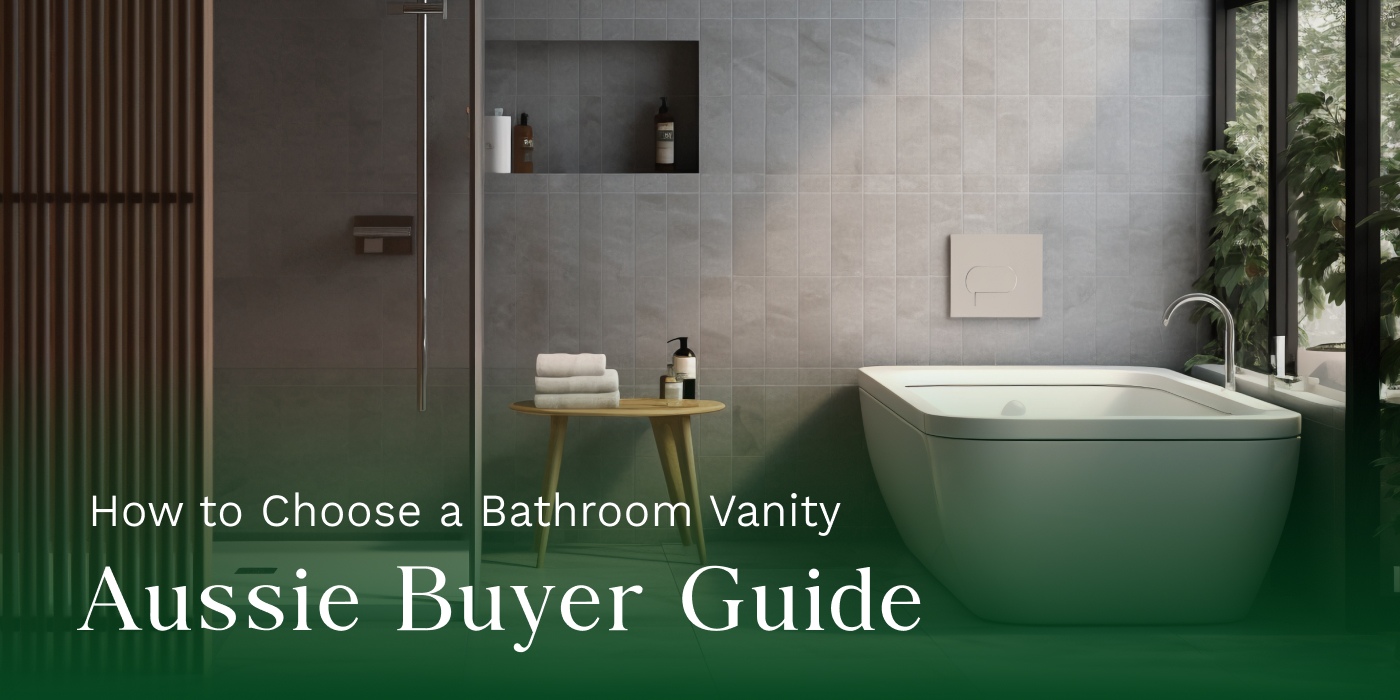
How to Choose a Bathroom Vanity
Choose the mounting style first (wall-hung to make a room feel bigger, freestanding for storage and to hide the plumbing), then the size, then the material. The standard Australian vanity height is around 900 mm, and common widths run 600, 750, 900, 1200, and 1500 mm. For our humidity, the cabinet material matters most: plywood or moisture-resistant board lasts, standard MDF does not.
Key takeaways
The vanity is the piece of furniture in your bathroom. It sets the tone, it carries the basin and the storage, and it takes daily wear in the most humid room in the house. It is also where a lot of budgets get wasted, either on a vanity that is the wrong size for the room or one made of a material that swells and peels within a couple of years. This guide walks through every decision, in order, so the vanity you choose is the right one for a Brisbane or Gold Coast bathroom.
Wall-hung or freestanding?
This is the first and biggest decision, because it affects how the room feels, how much you can store, and how the plumbing runs.
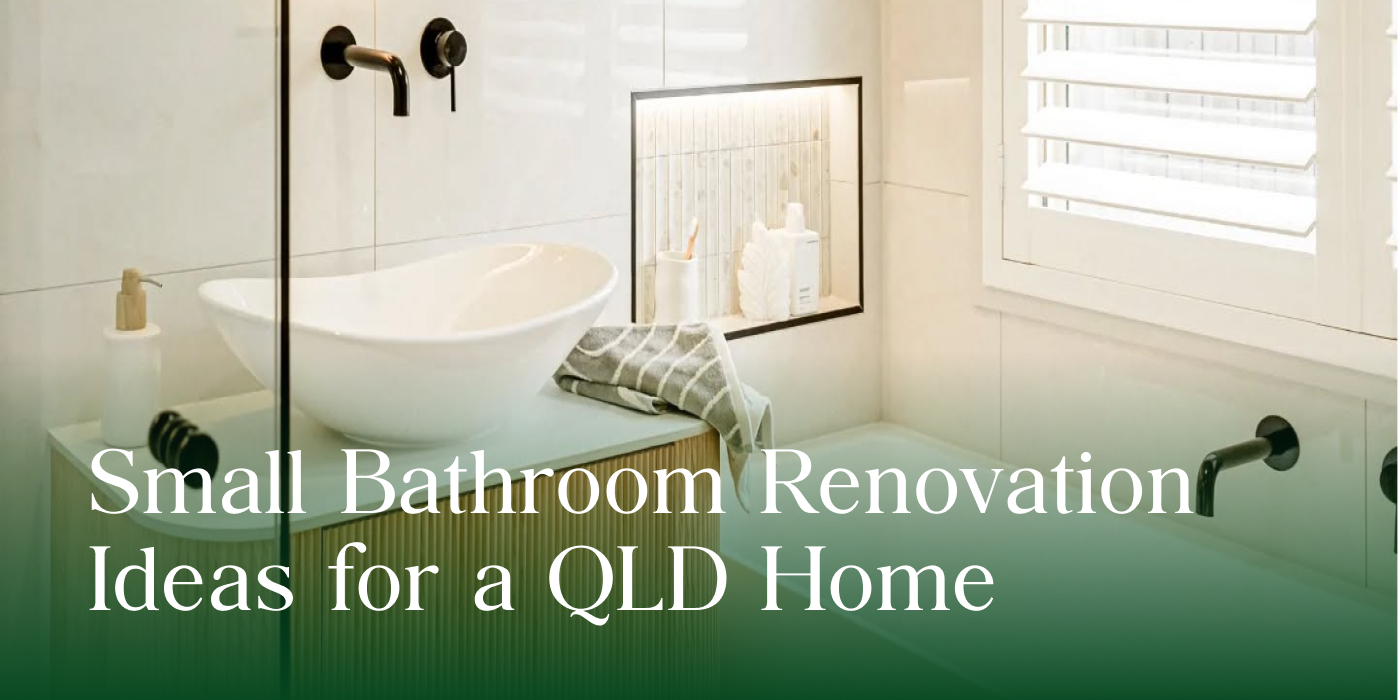
- Wall-hung (floating) vanities. Fixed to the wall with the floor visible underneath. They make a room look larger and lighter, they are easier to clean under, and they suit a modern look. The trade-offs: they need solid fixing and blocking in the wall to carry the weight, the plumbing usually runs inside the wall, and you lose the storage that a base would give you.
- Freestanding vanities. Sit on the floor like a cabinet. They give you the most storage, they hide the plumbing behind a kickboard, and they are simpler to install. They suit classic and coastal looks. The trade-off is that they make the floor area read as smaller, which matters in a compact bathroom.
- Single or double? A double vanity needs real width to work, generally 1200 mm or more, and ideally 1500 mm so the two basins are not cramped. In a narrow room, one good basin with bench space either side beats two squeezed basins every time.
- Corner and slimline vanities. For a small ensuite or powder room, a corner unit or a slimline vanity with a shallow depth can be the difference between a room that works and one that does not.
Standard Australian vanity sizes and heights
Vanities come in a wide range, roughly 400 mm up to 1800 mm and beyond. These are the sizes you will actually see and choose between in Australia.
| Type | Typical width | Notes |
|---|---|---|
| Powder room / small ensuite | 450 to 600 mm | Slimline or corner units keep a tight room usable. |
| Standard single | 600 to 900 mm | The most common choice for a main bathroom or ensuite. |
| Large single | 1000 to 1200 mm | One basin with generous bench space either side. |
| Double | 1200 to 1800 mm | Two basins. 1500 mm and up is comfortable, 1200 mm is tight. |
On height, the modern Australian standard is around 900 mm, the same as a kitchen benchtop, which suits most adults. If your household is taller or shorter, or if you are choosing an above-counter basin, adjust: an above-counter (vessel) basin sits on top of the cabinet, so the effective height rises, and the cabinet itself should be lower to compensate. Depth is usually 450 to 550 mm, with slimline units going shallower for tight rooms.
Leave room to actually use it
The most common vanity regret is a unit that fits the wall but not the room. Before you choose, check the clearances. Allow comfortable space in front of the vanity to stand and move, and make sure drawers and doors can open fully without hitting the toilet, the entry door, or a side wall. The clearances the National Construction Code now sets for new homes are a good comfort benchmark even in a renovation (see the Kitchen and Bathroom Designers Institute). A vanity that blocks the door or clashes with the toilet is a daily annoyance that no finish can fix.
Not sure what vanity fits your bathroom? We measure the room, check the clearances, and help you choose a vanity that fits and lasts, as part of a free site visit. Book at xbathrooms.com.au/contact.
The material that matters most: the cabinet
This is the decision that decides whether your vanity still looks good in five years. The cabinet lives in the most humid room in the house, and cheap cabinetry is where budget vanities fail. Here is how the common materials stack up in a Queensland bathroom.
| Cabinet material | Moisture resistance | Best for |
|---|---|---|
| Plywood | Best | The most water-resistant option. Worth it in our climate, and the go-to for quality and coastal builds. |
| Moisture-resistant board | Good | Purpose-made for wet areas. A sensible mid-range choice that holds up far better than standard board. |
| Standard MDF | Poor | Budget-friendly but swells and peels if it gets wet or lives in high humidity. Avoid it as the main cabinet. |
| Solid timber | Good with care | Beautiful, but it needs sealing and ongoing care, and it moves with humidity. A considered choice. |
The short version: plywood or a proper moisture-resistant board for the cabinet. Standard MDF is where a cheap vanity looks cheap within a couple of wet winters. Also check the hardware, soft-close hinges and runners are worth having, and they should be rated for a bathroom, not a bedroom wardrobe.
Benchtops and basins
The top and the basin are the surfaces you see and touch every day, so they carry a lot of the look.
- Benchtops. Engineered stone is hard-wearing and low-maintenance and the most popular choice. Timber tops look warm but need sealing and care in a wet room. Ceramic and porcelain tops are practical and clean easily.
- Basin styles. An above-counter (vessel) basin sits on top and makes a statement, but raises the effective height and can be harder to clean around. An inset or drop-in basin sits into the top. An under-counter basin gives a clean, wipeable benchtop. An integrated basin, moulded as one piece with the top, is the easiest of all to keep clean.
- Water efficiency. Choose tapware and any basin with a good WELS water rating. It is a small thing that saves water and money over the life of the bathroom.
Storage: drawers or doors?
Storage is where a vanity earns its keep, and the choice between drawers and doors is not just about looks.
- Drawers give you far better access. You can see and reach everything, rather than kneeling to dig into the back of a cupboard.
- Drawers have to be designed around the plumbing. The waste and water lines take up the space directly under the basin, so good vanities use U-shaped drawers or side drawers to work around them.
- Doors are cheaper and give you one large space, which suits bulky items and baskets.
- Soft-close on both drawers and doors is worth the small extra cost. It is the difference between a vanity that feels cheap and one that feels considered.
- Do not under-specify storage. Running out of storage is one of the most common vanity regrets, and it is the reason people end up with clutter on the bench.
Choosing a vanity for a coastal Gold Coast home
Near the water, the same rules apply, with two additions. First, the salt air is hard on metal, so choose corrosion-resistant hinges, runners, and handles, and marine-grade or quality finishes on any exposed metal, the same logic as coastal tapware. Second, humidity is higher again, so the case for plywood or moisture-resistant board over standard MDF is even stronger. A cheap vanity that would struggle in Brisbane will struggle faster in a beachside Gold Coast bathroom.
What does a bathroom vanity cost?
The vanity unit itself is only part of the cost, because it still has to be installed and connected by licensed trades. As a rough guide to the unit, in Australia you can expect:
| Vanity width | Typical price (unit only) |
|---|---|
| 600 mm | around $200 to $500 |
| 750 to 900 mm | around $350 to $700 |
| 1200 mm and up | around $500 to $1,200+ |
Stone tops, LED mirrors, custom joinery, and premium hardware push those figures higher. On top of the unit, allow for delivery, the plumbing connection by a licensed plumber, and installation. The cheapest vanity is rarely the best value, because the saving usually comes out of the cabinet material and the hardware, which are exactly the parts that fail first.
The vanity mistakes we see most
- Choosing standard MDF cabinetry, which swells and peels in the humidity.
- Buying a vanity that is too big for the room, so it blocks the door or crowds the toilet.
- Ignoring drawer and door clearance, so they cannot open fully.
- Under-specifying storage and ending up with clutter on the bench.
- Forgetting the height, especially with an above-counter basin, so the basin ends up uncomfortably high.
- Near the coast, choosing hardware that corrodes within a year or two.
- Buying the cheapest unit and paying for it again when it fails early.
How we help you choose
As part of the design and quoting process, we help you choose a vanity that fits the room, suits the humidity, and lands inside your budget, and we handle the licensed installation.
Frequently asked questions
Around 900 mm, the same as a kitchen benchtop, which suits most adults. Adjust for a taller or shorter household, and remember an above-counter basin sits on top and raises the effective height.
Plywood or a purpose-made moisture-resistant board for the cabinet. Both handle the humidity far better than standard MDF, which tends to swell and peel over time. This matters even more in coastal Gold Coast homes.
Wall-hung makes a room feel larger and is easier to clean under, but needs solid fixing and gives less storage. Freestanding gives more storage and hides the plumbing. Choose based on the size of the room and how much storage you need.
Common single widths are 600 to 900 mm. Go to 1000 to 1200 mm for more bench space, and 1500 mm or more for a comfortable double. In a small room, one good basin beats two cramped ones.
The unit itself runs roughly $200 for a basic 600 mm up to $1,200 or more for a large or premium vanity, before delivery and licensed installation. Stone tops and LED mirrors add to that.
You can position and fix a freestanding cabinet, but connecting the plumbing must be done by a licensed plumber in Queensland. We cover the licensing rules in our guide on DIY bathroom renovations.
Get help choosing the right vanity Book a free site visit and we will help you choose a vanity that fits your bathroom, suits the climate, and works with your budget, and we will install it properly. Complete the form below to book your free site visit.
About the author
Fineas Pintilie is a co-founder of xBathrooms, a QBCC licensed bathroom renovation company (licence 15482767) and Master Builders member working across Brisbane and the Gold Coast. Fineas and the team have completed more than 50 bathroom renovations, designing, supplying, and installing each one under one roof.